


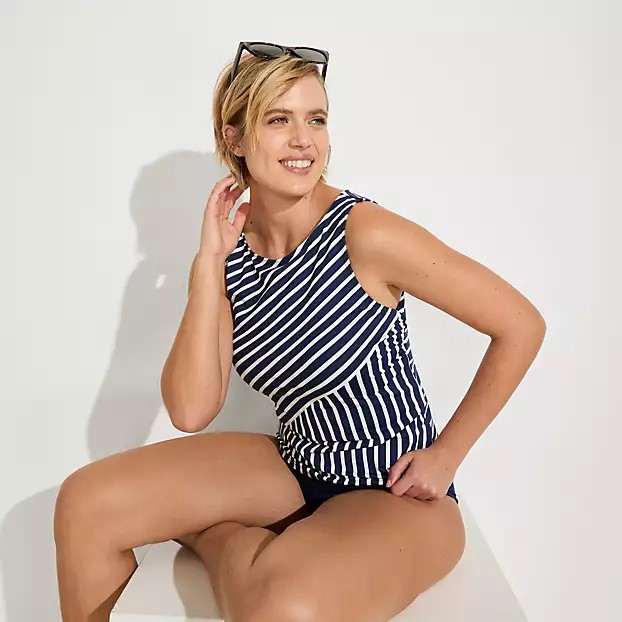
What Defines a Great Fit in Swimwear
A great fit feels secure, smooth, and easy to move in. It supports where you want support and
covers what you want covered. Therefore, it lets you focus on the water, not the suit.
Swimwear should match your shape and your plans. Lap swim needs structure. A beach walk needs comfort. Because of this, material, construction, and adjustability all matter.
Underwire vs. Shelf Bra
Underwire and shelf bras do the same job in different ways. Both aim to lift and hold. The right choice depends on your size, your activity, and your comfort.
When Underwire Works
- Underwire has a curved wire under each cup. It shapes and supports the bust.
- It helps separate and reduce bounce.
- It suits fuller cups or anyone who wants a defined look.
Fit tip: The wire should sit flat against the ribcage and fully surround breast tissue. If it pokes, the cup is too small or the wire shape is off.
When a Shelf Bra Shines
- A shelf bra uses a soft underband with mesh or molded lining. No wire.
- It feels lighter and more flexible.
- It suits smaller to medium cups or low-impact days.
Fit tip: The underband should feel snug and steady. If the top lifts when you raise your arms, tighten the straps or size down in the band.
Fit Checks for Swim Tops
- The center front should lie close to the chest.
- Straps should not dig or slip.
- No overflow along the neckline or sides.
Because of this, try a few cup and band combos. Small tweaks change support fast.
Tummy-Control Panels
Tummy-control panels use stronger fabric in key zones. The goal is smooth support, not stiffness. As a result, the suit feels steady and balanced.
Panel Types and Placement
- All-over power mesh: light shaping across the torso.
- Front panel: focused smoothing where many want it most.
- Wrapped or ruched fronts: gentle hold with visual drape.
Tip: Stretch the fabric and release. It should bounce back cleanly. If it waves, support may fade with wear.
Comfort and Mobility
You should sit, bend, and swim without pinch points. Panels should not roll or curl. If they do, adjust torso length or size. Therefore, the function stays intact all day.
Adjustable Straps and Closures
Small adjustments make a big difference. Custom strap length and band tension bring comfort into focus.
Straps to Try
- Fixed adjustable straps: simple sliders for daily tuning.
- Convertible straps: switch to cross-back for more hold.
- Wide straps: spread pressure and feel gentle on shoulders.
Fit tip: If straps slip, shorten first. If they still slip, try a different back shape or textured straps.
Back Closures and Bands
- Hook backs allow precise band tension.
- Pull-on styles rely on stretch and strap placement.
- Underbust bands matter as much as cups.
Because of this, test the band by moving your arms and twisting. The suit should stay put.
Long-Torso Cuts
Torso length shapes comfort. If the suit pulls at the shoulders or rides up, you likely need more length. A long-torso cut adds depth through the body.
How to Measure Torso Length
- Start at the top of one shoulder.
- Run the tape down the front, through the legs, and up the back to the starting point.
- Compare to brand size charts.
If you fall between, try long-torso or size up and adjust straps.
Styles That Give You Length
- One-pieces labeled “long torso.”
- Tankinis: top and bottom split the length and give easy bathroom breaks.
- Suits with vertical seams: add shape and space.
Therefore, you get freedom to reach, swim, and lounge.
Coverage That Matches Your Day
Coverage is personal. It can shift with mood and activity. Choose what feels right for you.
Bottom Cuts
- High-rise bottoms smooth and support the midsection.
- Mid-rise gives a balanced line at the waist.
- Hipster or bikini cuts free the leg and feel breezy.
- Boyshorts and swim skirts add coverage for strolls and sports.
Fit tip: Leg openings should not dig. A clean seal helps prevent ride-up without tight marks.
Sun and Activity Considerations
- Rash guards and long-sleeve tops add sun coverage and reduce chafe.
- Higher necklines and secure backs suit surfing and laps.
- For lounging, softer fabrics and lighter support feel easy.
Because of this, a small swim capsule can cover all plans.
Sizing Tips for Confidence
- Start with your bra size for cup-based tops, then fine-tune the band.
- Use “sister sizes” when cups fit but bands do not. (Example: if 36C is loose, try 34D; same cup volume, tighter band.)
- Try suits dry and then do a movement test. Sit. Reach. Squat. If the suit shifts, adjust straps or style.
- Between sizes? Size up for comfort, then use straps or ties to secure.
Fit for More Sizes
Everybody deserves options. Look for brands with true cup sizes, multiple torso lengths, and thoughtful panels. If you want more styles in extended sizes, explore plus size swimwear from Lands’ End. This keeps the search simple and size-aware.
How to Build Your Swim Closet
- One support hero: an underwire one-piece or firm-support bikini top for active days.
- One comfort go-to: a shelf-bra tankini or soft-cup one-piece for long wear.
- One coverage piece: a rash guard or swim dress for sun and strolls.
- Two bottoms: a secure high-rise and a sport-friendly option.
Because of this, you can mix and match to fit the day.
Final Thoughts on Swimwear Fit
The right fit supports your plans and your posture. It keeps you comfortable in and out of the water. Therefore, confidence follows.
Know your bust support, choose the coverage you want, and match torso length to your frame. With smart adjusters and steady fabrics, your suit works as hard as you do.